
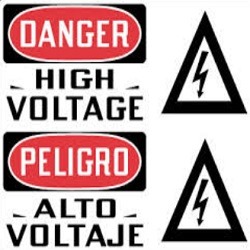
In Europe, where there are several languages, and workforces regularly cross borders for employment, they have instituted a variety of programs to ensure communication meets required levels. In the US, our primary language is English, and more and more the workforce has a mix of English and Spanish. We can learn from Europe’s example.
Steps must be taken in the workplace to ensure your employees can understand directions, hazard warnings, and safety processes and instructions. It’s great to have bilingual temporary employees, and to request bilingual skills in applicants you need, but it’s almost impossible to know for sure the level of reading, writing and speaking skill an applicant has for both primary languages. Be aware of that, as you make organizational development plans.
Poor communication in general is often the stated reason for some breakdown or failure, when it may be something bigger related to language itself. Here in the US, now with the commonality of both Spanish and English in the workforce, it’s easier, and less riskier, to make provisions to communicate in both English and Spanish.
Even with this awareness, language is often an overlooked issue, and it affects safety. What does poor communication mean in a safety perspective? Let’s look at some of the potential consequences.
- Lack of understanding. Workers may not understand safety training provided if it is not provided in their primary language. This may result in equipment misuse, injuries and accidents.
- Emergency procedures. Language may affect an employee’s ability to communicate in an emergency situation, or express critical information to supervisors.
- Incident reporting. workers may hesitate to report injuries, accidents or other human resources issues for fear of losing their job based on perceived limitations of language skills.
- Limiting contribution. Many employees are exemplary employees, but fear their language skills will hold them back from promotion. This is an enormous opportunity cost to your company.
Some solutions that can be implemented to benefit your company are fairly simple.
- Translate and post safety material, procedures and policies in both English and Spanish.
- Have shift supervisors and team leaders on each shift with certified bilingual skills.
- Look at bilingual in English and Spanish as a business opportunity, not a cost.
Oh! What was that last bullet? Yes, that is clearly something that can make your company money. Any company that is bilingual is going to produce more products and services that serve the needs of two language-centric markets. This means access to a larger overall market and increased business potential.
Develop a culture where language is not the barrier, but management’s interest in maximizing employee contribution can overcome those barriers. The result will be greater in every business aspect. And, the focus will be redirected from a perceived human resources issue, to that of business productivity and results. What could be better!
Call Barton Staffing Solutions today, to have a deeper discussion on how we can serve your organizational development needs through staffing and recruiting services. Our full-time safety manager can help you assess your facility for bilingual communication limitations and help develop a plan to overcome them. Call us today.


