
Whether on paper, or online, you are sharing information that by your signature, are stating is true, complete and accurate. You are sharing information that will ultimately be used by an employer to determine your eligibility to work for them. Be complete and accurate.
30 years ago, it may have been possible to hide that one time that an error in judgment got you in trouble with the law. It was possible because newspapers were the primary method of communicating what happened the night before on the police beat. As newspapers were discarded, the memory faded.
Today, however, information is persistent. News is published on the web, and historical records are persistent. Google has helped make information accessible and the internet has allowed it to be stored forever.
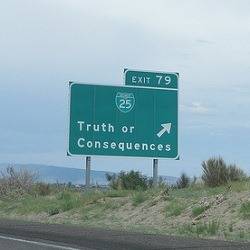
Truth or Consequences
Except for a few jobs (like working with children, handling financial instruments, etc.), laws protect you from discrimination solely based on your mistakes of the past. So be truthful about your past.
However, lying on a job application is an invitation for an employer to eliminate you on the basis of being dishonest. There are consequences for being less than honest. And today’s persistent and searchable information stream makes discovery inevitable.
Today, you stand a much better chance of an employer wanting to give you a chance if you disclose anything you may be hesitating to share about your past. If you are applying for a role, or with an employer, that requires a background check, Be complete and accurate.
What you think they might not find out about your past has a significantly better chance of being discovered today with big data, the internet and Google. In addition to reference checking, there’s a better than 80% chance that an employer will Google you to validate what is on your application.
The conclusion your potential employer will draw is that you are dishonest – and that is a reason to rank you lower than a candidate that has been truthful and fully disclosed their history.
Barton Staffing Solutions gives applicants guidance in this area. We regularly work with clients and employees to ensure the smoothes hiring process, even when there are special circumstances. But incomplete, inaccurate, or false information on your application is not an obstacle anyone can overcome. Always be complete and accurate.


